AVRF 2011 Annual Meeting summary of Wallace/McCormack presentations
 |
By Peggy Wallace and Wayne McCormack
University of Florida College of Medicine
Gainesville, Florida
|
 |
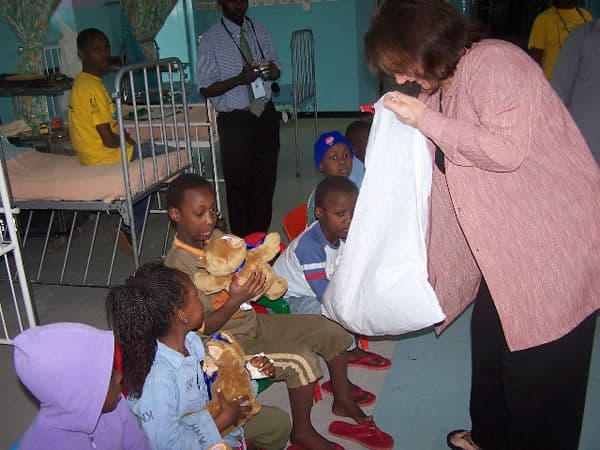
Dr. Wayne McCormack, member of the AVRF Medical Advisory Board, and moderator of the meeting this year, started the meeting off with a discussion about “Medical Research in America: Why It’s Important and How It’s Funded”. He briefly described the process of basic research leading to clinical research leading to changes in medical practice, such as new treatments, devices, vaccines, drugs, etc. After a discussion about the benefits of medical research, Dr. McCormack explained that most medical research is funded by the US government, such as from the National Institutes of Health (NIH), and by industry, and only a small percentage is funded by foundations and charities (3% in 2003). Current NIH funding for vitiligo research totals only $1.3 million, for only four research projects. This emphasizes the importance of foundation funding of small projects to keep vitiligo research going and help researchers to obtain preliminary data for NIH grant proposals for larger projects. Drs. McCormack and Wallace described how other foundations, such as the Children's Tumor Foundation, have successfully grown from grassroots volunteer organizations like the AVRF into major drivers of research funding and scientific collaboration. Given the current economy, the AVRF is stretched just to continue its public awareness efforts (and the terrific annual meeting, which benefits the kids tremendously), but is not in a position to support research at the moment. AVRF members are encouraged to support the AVRF in any way possible, whether through charitable contributions or having local fundraising events. Even small amounts, when added up from many people (like the penny campaign), can make a big difference and can help the AVRF take its missions to the next level. Also, making connections with people in the community who can provide help for grants or events is very important. Many such opportunities exist, if someone is willing to ask and help get a project off the ground. A small example: if you’re going to hold a garage sale for AVRF, ask your neighbors to contribute any stuff they want to get rid of - that will add to the proceeds, as well as help educate the community about vitiligo. Networking can be a powerful way for the AVRF to grow, to help succeed in spreading awareness and acceptance of vitiligo, as well as funding medical research to find better therapies.
Dr. Peggy Wallace spoke next, beginning with a brief review of the clinical aspects of vitiligo, skin and pigmentation, and where the biggest needs are in research to move toward a better therapy. The main theories about vitiligo were covered (e.g., genetic predisposition, autoimmunity, oxidative stress, etc.), with Dr. Wallace focusing on the genetics aspect. She also indicated that all of these factors are likely involved in vitiligo, which may explain some of the variability between patients. It was explained that finding genes that contribute to vitiligo susceptibility identifies the biochemical paths involved, which can lead to finding more precise treatments. Dr. Wallace reviewed “genetic association” studies of cases compared to controls, which has been very fruitful in the past two years, identifying over 30 candidate genes. Most of these genes appear to be involved in the main theories of vitiligo. Dr. Wallace discussed that a logical next step is to investigate these candidate genes in other populations (ethnic groups), and more deeply examine them in families with more than one case of vitiligo. The goal is to find the gene variants that affect its function such that people with these variants have a higher risk for vitiligo. She then introduced Mr. Zachary Grabel, a former undergraduate researcher in her lab, who performed a study of the tyrosinase gene (TYR) in vitiligo families. Mr. Grabel presented his work, including his discovery that all 7 families had DNA types consistent with TYR being a vitiligo gene, with a predominant shared haplotype at the three variant spots. Further, one of his families showed that the risk region could be narrowed down further with just two variant positions within the gene. Thus, his work shows that the TYR gene is likely an important vitiligo gene in such families. Dr. Wallace then mentioned that the tyrosinase gene is also involved in both the oxidative stress and the autoimmunity aspects of vitiligo, making it a good candidate to study further. She wrapped up the session by indicating that the genetics work has opened new directions for vitiligo research, and we have the scientific tools to do this work if funding can be obtained.
|